What's ESP?
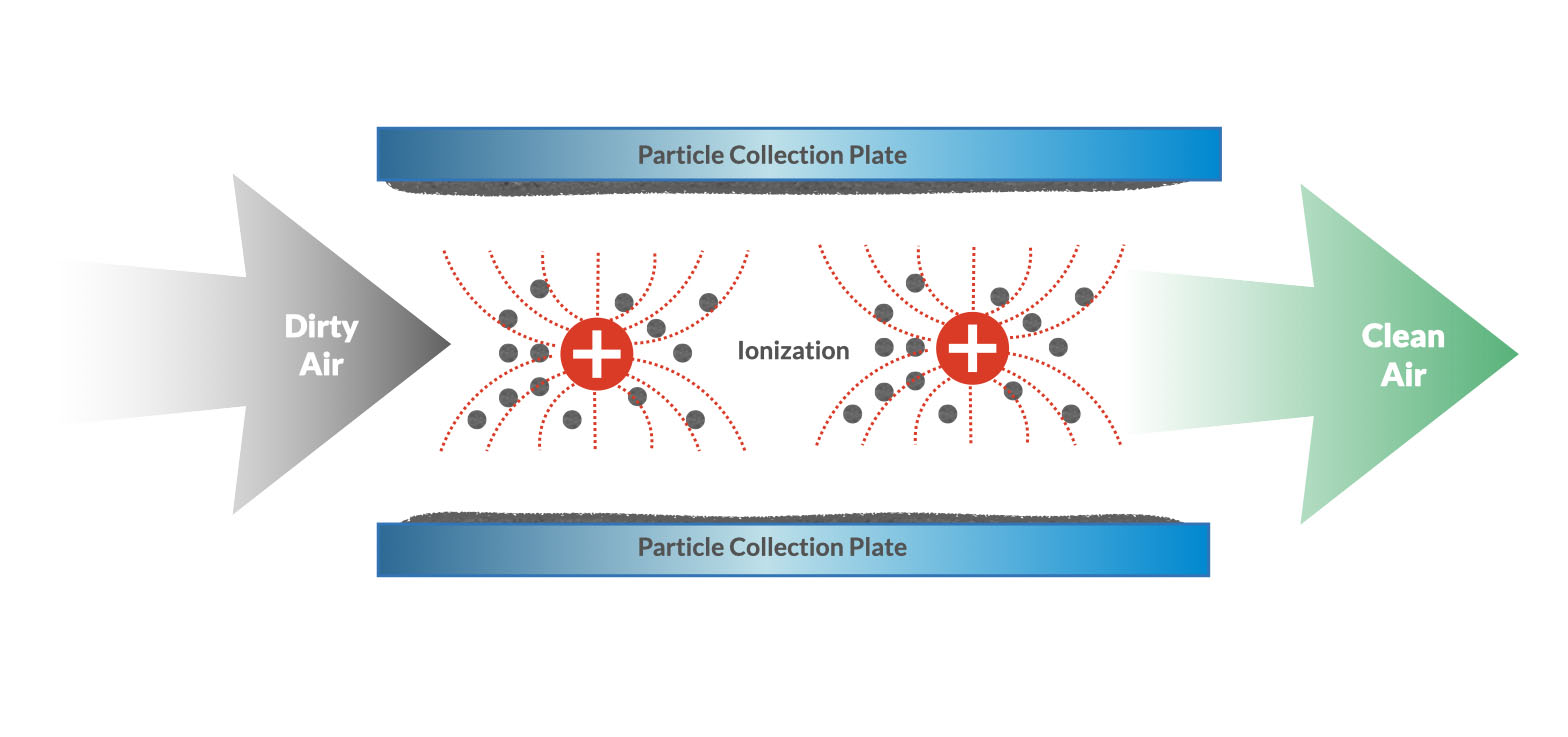 An electrostatic precipitator (ESP) is a device used for removing fine particles, such as dust and smoke, from a flowing gas using the force of an induced electrostatic charge.
Working Process:
- Ionization: The dirty gas enters the precipitator and passes through an ionization section. In this section, a high voltage direct current (DC) electrode creates a corona discharge, which ionizes the gas molecules. This means that gas molecules lose or gain electrons and become charged ions.
- Particle Charging: As the gas flows through, particles within the gas (such as dust or smoke) collide with the ionized gas molecules and themselves become charged (usually negatively).
- Particle Collection: The charged particles then pass through a series of collector plates (which are grounded or have the opposite charge to the particles). The electrostatic attraction causes the particles to move towards and adhere to these plates.
- Particle Removal: Periodically, the plates are cleaned to remove the accumulated particles. This is often done by mechanical shaking or rapping, causing the particles to fall into a hopper for disposal.
AQT's 2 Stages Spike ESP
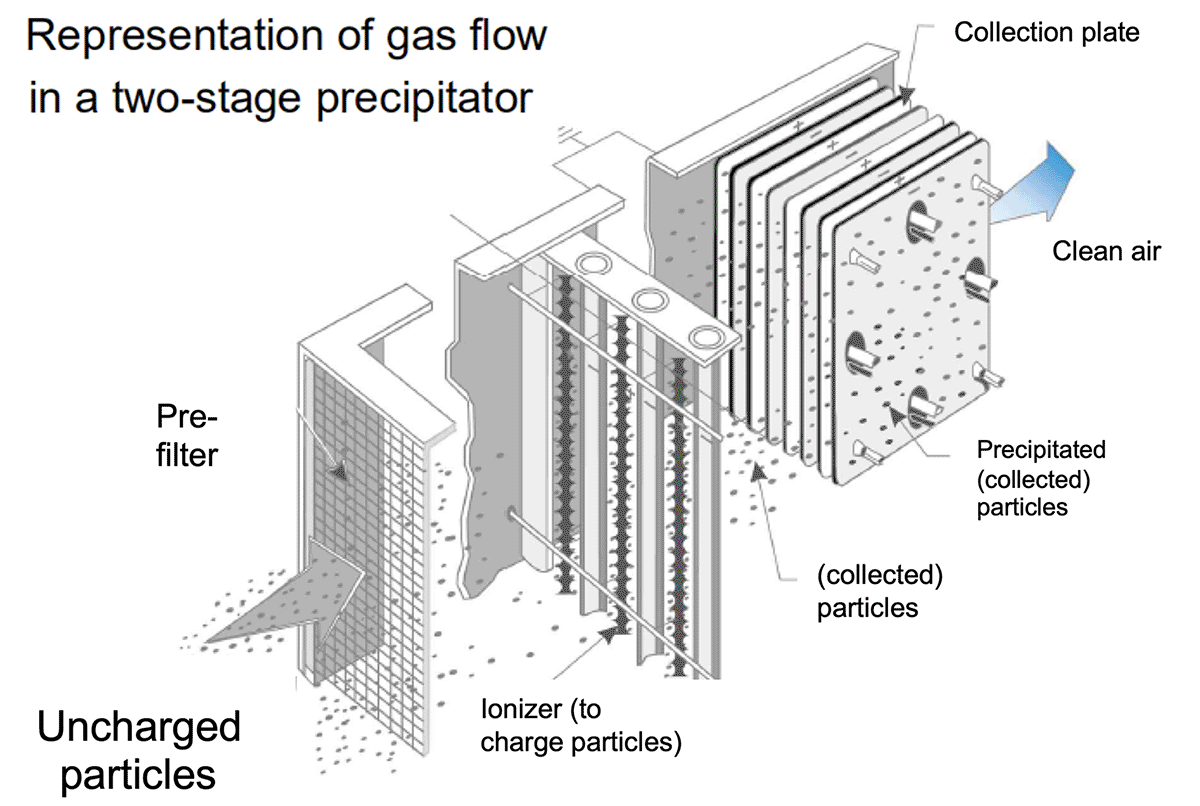
Definition: Under the influence of a high-voltage electric field, oil fume particles become charged as they pass through the ionization zone. These charged particles are then attracted to and collected on the electrode plates in the collection zone, achieving oil fume purification.
Working Principle and Technical Characteristics: The purifier uses electrostatic adsorption technology to create a high-voltage electric field inside. This causes oil droplets and particles in the fume to become charged and adhere to the collection plates. The discharge is maintained in the glow ionization stage, achieving efficient purification. AIRQUALITY oil fume purifiers are safe, efficient, and easy to maintain. They feature insulated ceramic blocks and intelligent power-off technology to prevent arcing and creeping discharge, ensuring safe operation. The large collection plates and spike ionization structure facilitate cleaning and long-term efficient operation, with an optional automatic washing system to reduce maintenance costs.

How Does It Remove Oil Fume?
Stage 1: A corona is generated by approximately 12,000 volts, releasing electrons that collide with air molecules, creating more electrons and forming an electron avalanche effect.
Stage 2: Air molecules that capture or lose electrons form positive and negative ions, which move toward the electrode plates under the influence of the electric field.
Stage 3: Oil mist particles collide and stick with charged air molecules, causing the oil mist particles to become charged.
Stage 4: Charged oil mist particles move toward the plates under the electric field in the collection zone and are firmly adsorbed onto the electrode plates, forming large oil droplets that slide down the plates. When a thick layer of oil accumulates on the plates, the efficiency of fume removal decreases, requiring cleaning to restore optimal efficiency.
Scope of Application:
Mainly used in places that need to handle kitchen fumes, such as restaurants, hotels, canteens, and food processing plants. It is also effective for purifying welding fumes and high-concentration dust in industrial settings.
Competitor Difference:
AIRQUALITY oil fume purifiers avoid the short lifespan and high maintenance costs of traditional tungsten wire ionization, as well as the high energy consumption and inconvenient cleaning of honeycomb ionization. They adopt spike ionization technology to achieve two-stage ionization and four-point discharge, ensuring high efficiency, safety, and easy maintenance of the equipment.